Improve your space’s comfort with insulation that reaches beyond standard framing spaces. Blown-in insulation uses loose-fill fibres, such as cellulose or fiberglass, installed with specialized equipment to cover attic floors or fill suitable enclosed cavities.
At Archeh, we help you choose the right material and installation approach for your space, whether you are upgrading attic insulation or improving an existing home.
Helps slow heat transfer, supporting warmer indoor spaces in winter and cooler spaces in summer.
Improved Energy Efficiency
Proper insulation coverage can help reduce heating and cooling demand. Actual savings depend on your home’s condition, air sealing and existing insulation.
Coverage Around Obstacles
Loose-fill material can fit around framing, wiring and other obstructions, making it practical for irregular attic spaces.
A Practical Attic Upgrade
Suitable existing attic insulation can often be topped up after its condition, air leakage and ventilation have been assessed.
Options for Existing Walls
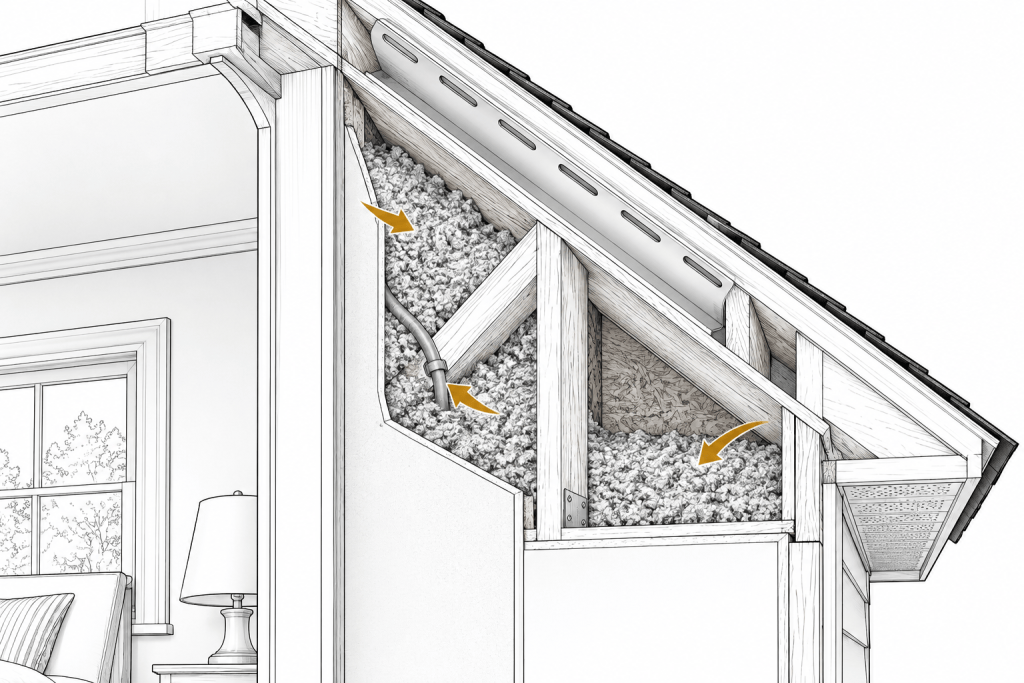
Appropriate dense-pack systems can insulate suitable enclosed wall cavities through small access openings, reducing the need to remove entire wall finishes.
Recycled-Material Options
Cellulose insulation is made primarily from recycled paper fibres, offering an option for projects that prioritize recycled content.
Where Can Blown-In Be Used?
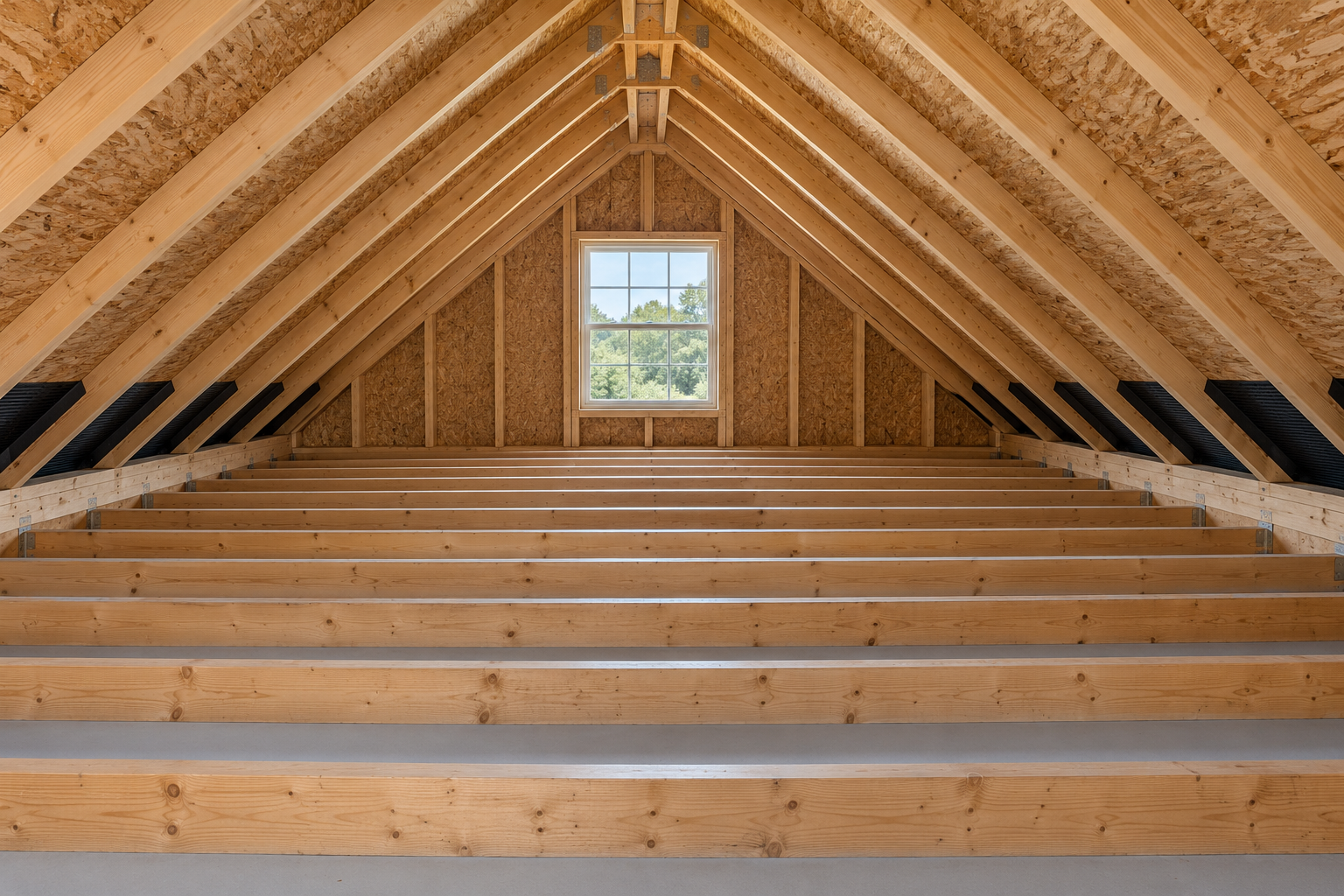
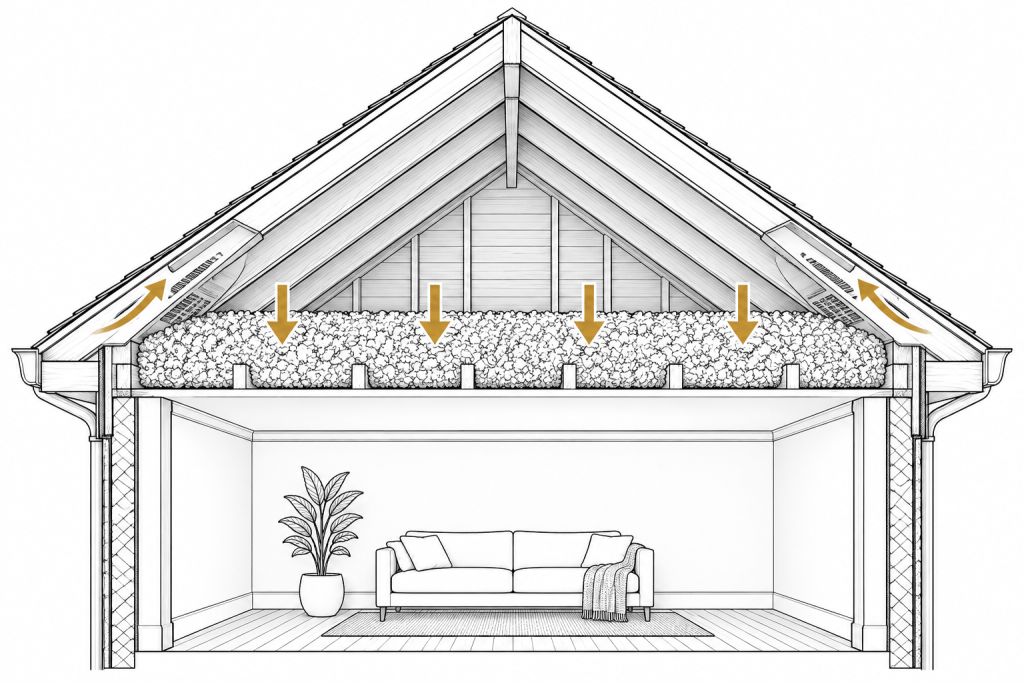
Loose-fill insulation installed between and above ceiling joists while keeping ventilation paths clear.
Suitable enclosed assemblies, with the required ventilation and moisture-control design.
Accessible spaces where conventional batts are difficult to fit.
Choosing the Right Material
Show details
Hide details
Cellulose Insulation
Loose-fill insulation made primarily from recycled paper fibres treated for fire resistance. It can be used in attics and suitable wall cavities with the appropriate installation method.
Show details
Hide details
Fiberglass Blown-In Insulation
Loose glass fibres installed to the specified depth and density. Suitable products can be used for attic coverage and selected enclosed-cavity applications.
Performance depends on the correct material quantity, coverage, depth and installation density. Attic installations must account for the product’s specified settled thickness and keep soffit vents clear.
Blown-in insulation does not replace a dedicated air-sealing system. Air leaks, moisture issues and ventilation requirements should be addressed as part of the insulation upgrade.
Ready to start
Tell us about your project and explore the right insulation solution for your space.